Water is an essential resource for life and socio-economic development. In the context of water resources facing significant pressure from climate change, pollution, and overexploitation, integrating gender equality into water resource management, utilization, and protection is considered a crucial solution to improve resource governance efficiency and promote sustainable development.
Water is a vital element for socio-economic development.
Throughout human history, water has always played a fundamental role in all socio-economic activities. From agricultural and industrial production to daily life, water is an essential and irreplaceable resource. For Vietnam, the dense network of rivers and relatively high rainfall have been considered important natural advantages, facilitating economic development, ensuring food security, and maintaining natural ecosystems.
However, water resources are not unlimited. Population growth, rapid urbanization, and increasing demands for production and daily life are putting significant pressure on water resources. In addition, climate change, environmental pollution, and uncontrolled exploitation are causing many areas to face the risk of both quantitative and qualitative decline in water resources. This highlights the urgent need for more sustainable management and protection of water resources.
In this context, numerous international studies indicate that integrating gender equality into water resource management can contribute to improving the efficiency of governance and resource utilization. Women – who are directly involved in water use activities in their families and communities – can become a significant force in water conservation initiatives if they are fully involved in the decision-making process.
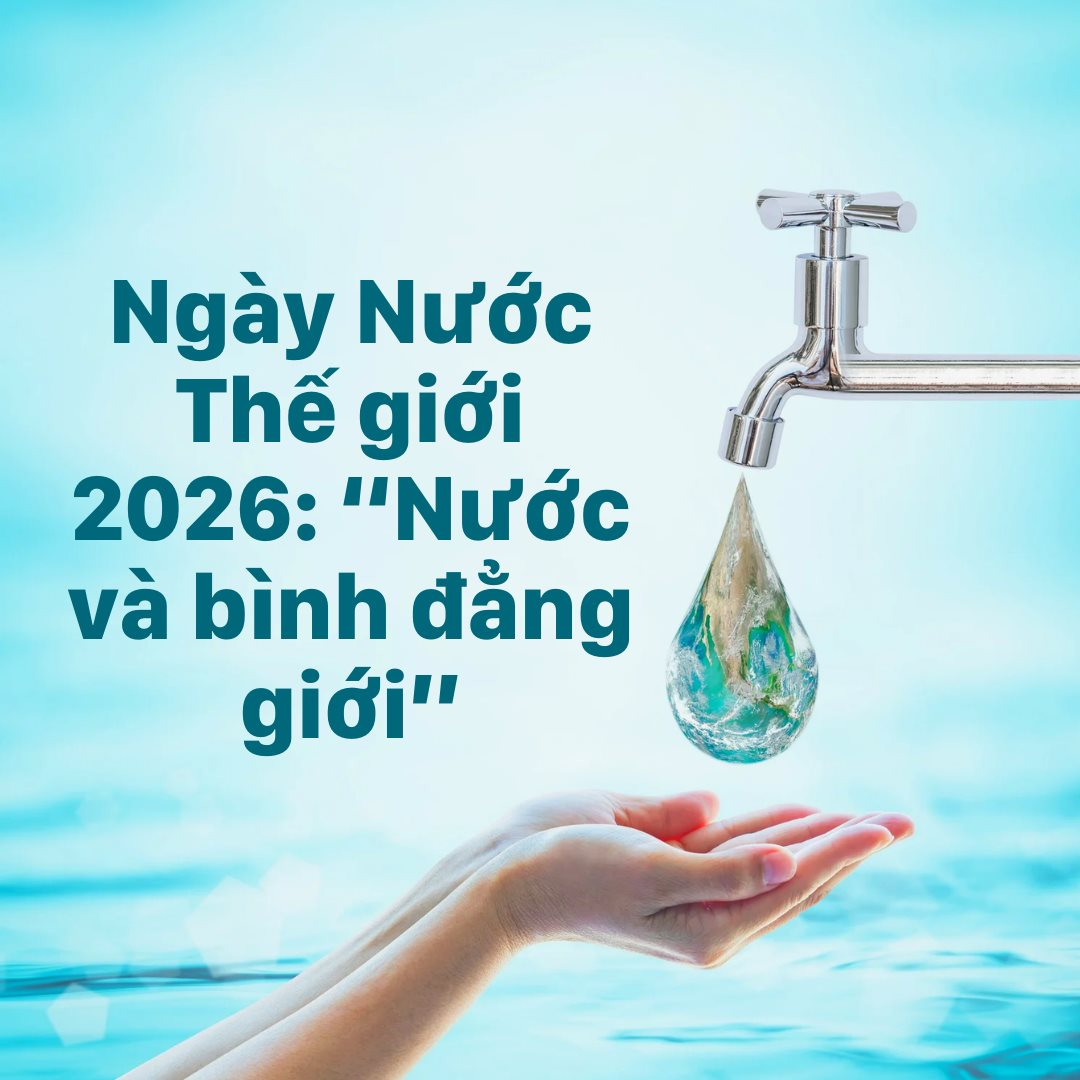
Emphasizing this connection, the United Nations announced the theme for World Water Day 2026 as “Water and Gender Equality.” This year’s message not only calls for ensuring safe water resources but also affirms that: Where there is water, there must be equality in development.
According to international organizations, the global water crisis is affecting billions of people, but the impact is not uniform. In many areas lacking clean water and basic sanitation, women and girls are often the hardest hit. In many rural and remote communities, they spend hours each day fetching water, carrying heavy containers, and facing numerous health and safety risks.
Furthermore, when water sources are unsanitary, women are often the ones caring for family members who suffer from waterborne illnesses and poor sanitation. The time and energy spent searching for water narrows the opportunities for education, employment, and development for women and girls.
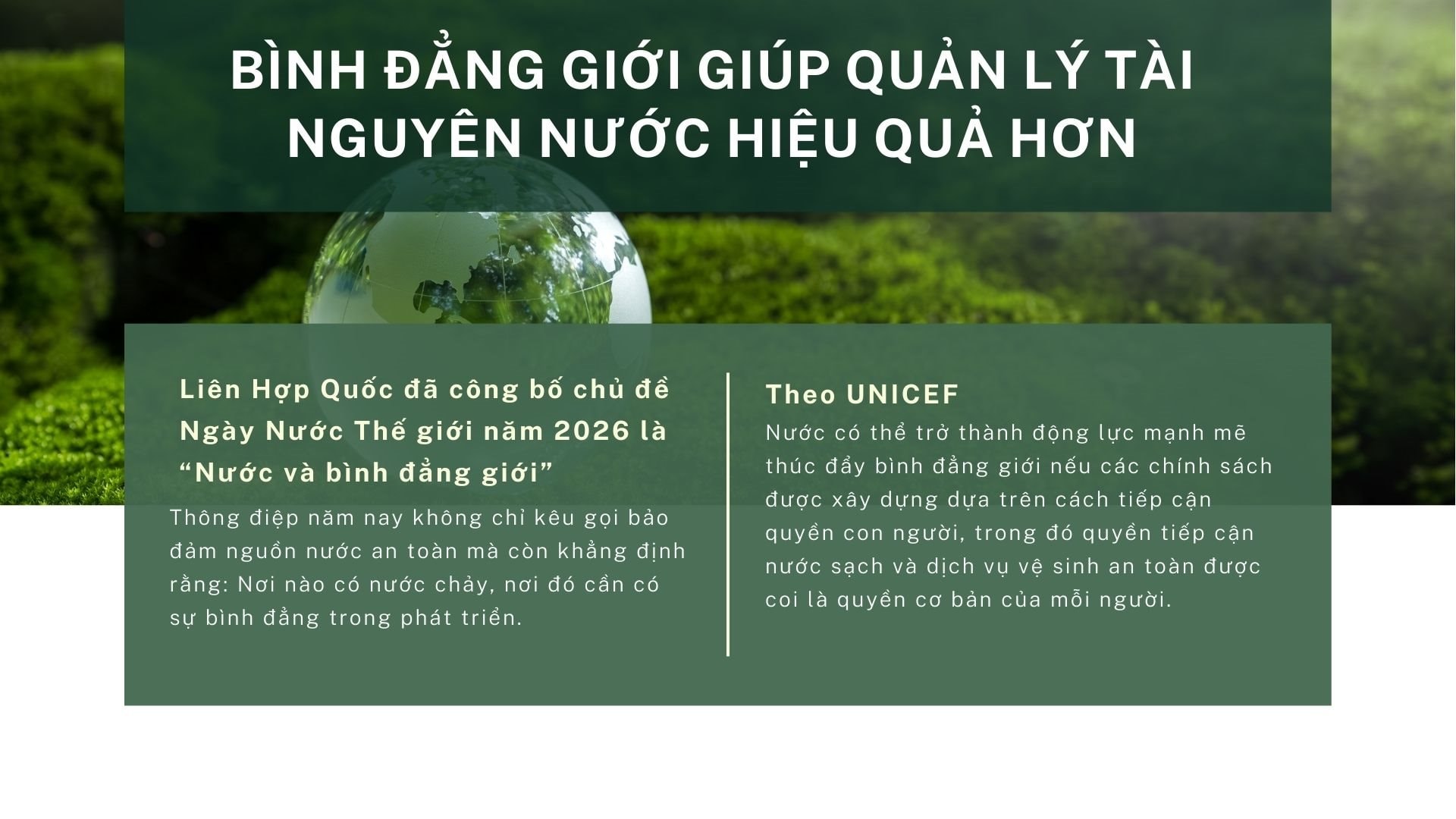
A notable paradox is that despite playing a central role in water use and management at the household and community levels, women often have little voice in decisions related to water policy, investment, and governance. According to UNICEF, water can become a powerful driver of gender equality if policies are built on a human rights approach, in which access to clean water and safe sanitation is considered a fundamental right of every person.
In the context of climate change and increasing water resource challenges, promoting the equal participation of women in water management and protection is considered a crucial approach to improving governance effectiveness and contributing to the achievement of sustainable development goals.
Current status of water resources in Vietnam
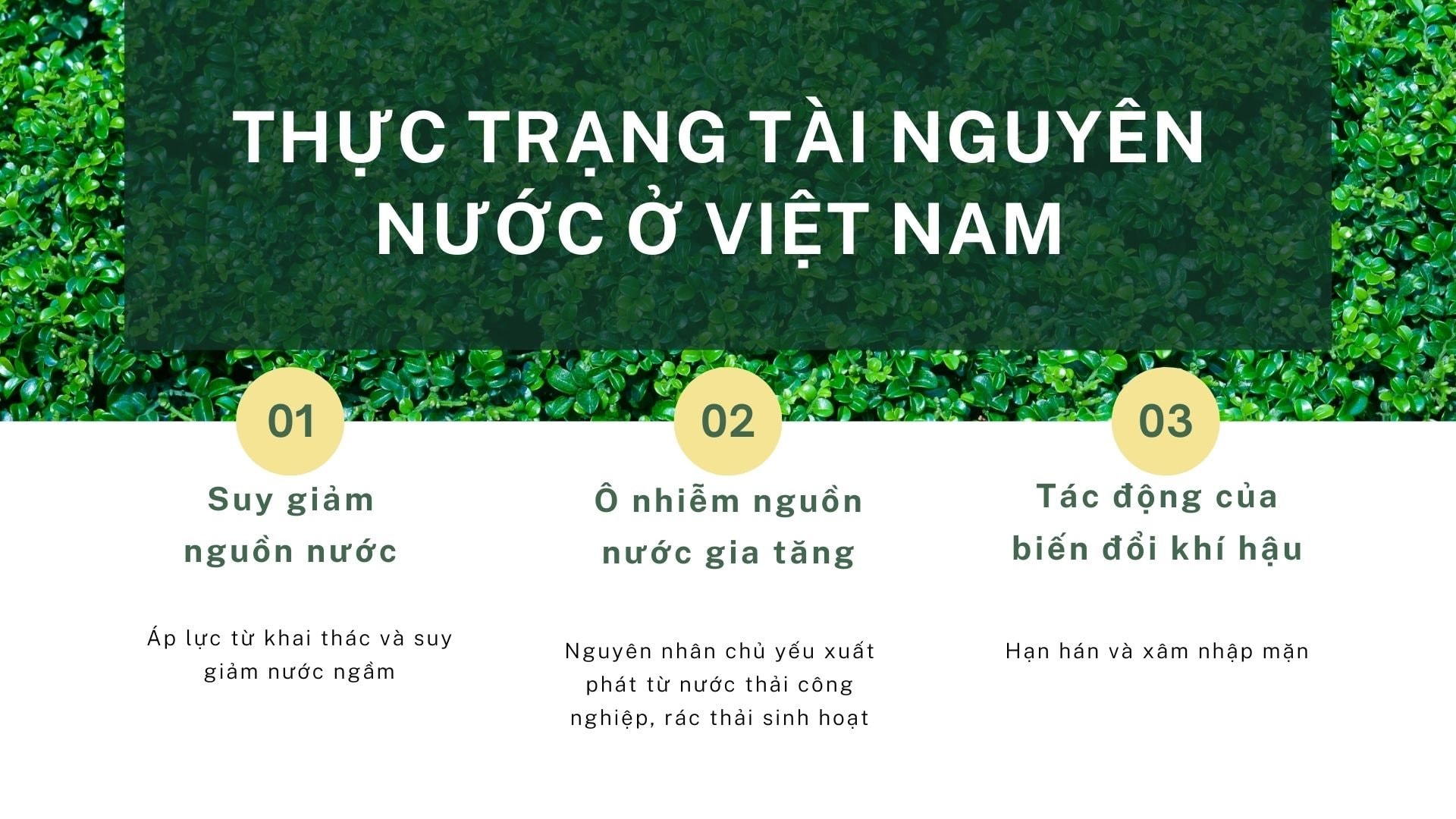
Water depletion: Pressure from exploitation and groundwater depletion.
Vietnam is considered a country with relatively abundant water resources and a dense network of rivers and streams. According to data from the Ministry of Agriculture and Environment, the country currently has approximately 3,450 rivers and streams with a length of 10 km or more, including 697 inter-provincial rivers, streams, and canals, 173 trans-national rivers and streams, and 38 inter-provincial lakes and lagoons. The total annual flow is estimated at approximately 844.4 billion m³, mainly concentrated in the Mekong River basin.
Besides its river system, Vietnam also has a fairly large reservoir system to store and regulate water resources for hydropower, irrigation, and flood control. Currently, the country has more than 2,900 hydropower and irrigation reservoirs with a total capacity of over 65 billion m³. Of these, about 2,100 reservoirs are in operation with a total capacity of over 34 billion m³, about 240 reservoirs are under construction with a capacity of over 28 billion m³, and more than 510 reservoirs have been planned. In addition, Vietnam has an advantage in rainfall, being among the countries with high rainfall in the world, averaging 1,940 - 1,960 mm per year, equivalent to about 640 billion m³ of water.
However, this advantage does not mean that water resources are always abundant. A noteworthy fact is that the amount of water generated within Vietnam's territory is only about 310-315 billion m³ per year, with the majority depending on water sources outside the territory. This makes Vietnam's water resources significantly dependent on transboundary river basins.
Furthermore, rainfall is unevenly distributed both spatially and temporally, concentrated mainly in the 4-5 months of the rainy season, accounting for 75-85% of the total annual rainfall, while the dry season accounts for only 15-25%. This disparity causes many areas to frequently experience water shortages during the dry season, especially in Central Vietnam and the Central Highlands.
Vietnam's groundwater resources also have considerable potential, with an estimated total reserve of approximately 91.5 billion m³ per year, of which freshwater accounts for about 69.1 billion m³. However, in many urban areas and developed economic zones, excessive groundwater extraction over a long period has led to a significant decline in groundwater levels, posing a risk of land subsidence and future water depletion.
If we consider the total water availability per capita, Vietnam has approximately 8,610 m³/person/year, higher than the average of many countries. However, if we only consider endogenous water sources, this figure drops to about 3,280 m³/person/year, lower than the Southeast Asian average (4,900 m³/person/year) and even the global average (4,000 m³/person/year). This indicates that Vietnam is facing the risk of becoming a water-scarce country in the near future if effective water management and utilization solutions are not implemented.
Water pollution is increasing.
Alongside declining water reserves, water pollution is becoming a major challenge to water resource security in Vietnam. According to environmental reports, more than 70% of the water in rivers nationwide is currently unusable for drinking or domestic purposes without treatment.
The main cause stems from industrial wastewater, urban wastewater, and household waste that are not thoroughly treated before being discharged into the environment. According to the Vietnam Association for Nature and Environment Protection, domestic wastewater accounts for about 80% of the total wastewater in cities, but only about 6% is treated before being discharged into rivers and lakes.
Mr. Yutaka Matsuzawa, an environmental expert from the Japan International Cooperation Agency (JICA) in Vietnam, once stated that wastewater is currently one of the leading environmental hazards to Vietnam's water resource system.
In many riverside areas and industrial zones, direct discharge of wastewater into the environment continues, causing serious degradation of water quality. Water pollution not only degrades ecosystems but also directly affects public health, while increasing the cost of treating clean water for domestic and industrial use.
According to World Bank forecasts, if water pollution is not effectively controlled, Vietnam could lose up to 4% of its GDP by 2035 due to a lack of clean water and increased environmental treatment costs.
Impacts of climate change: Drought and saltwater intrusion
Besides pressure from exploitation and pollution, climate change is increasing challenges to water resources in Vietnam. As one of the countries most heavily affected by natural disasters in the Southeast Asia-Pacific region, Vietnam frequently faces extreme weather events related to water.
In many areas of Central Vietnam and the Central Highlands, prolonged drought has severely affected agricultural production and people's lives. The decline in surface water resources during the dry season has made it difficult for many localities to ensure water for daily life and irrigation.
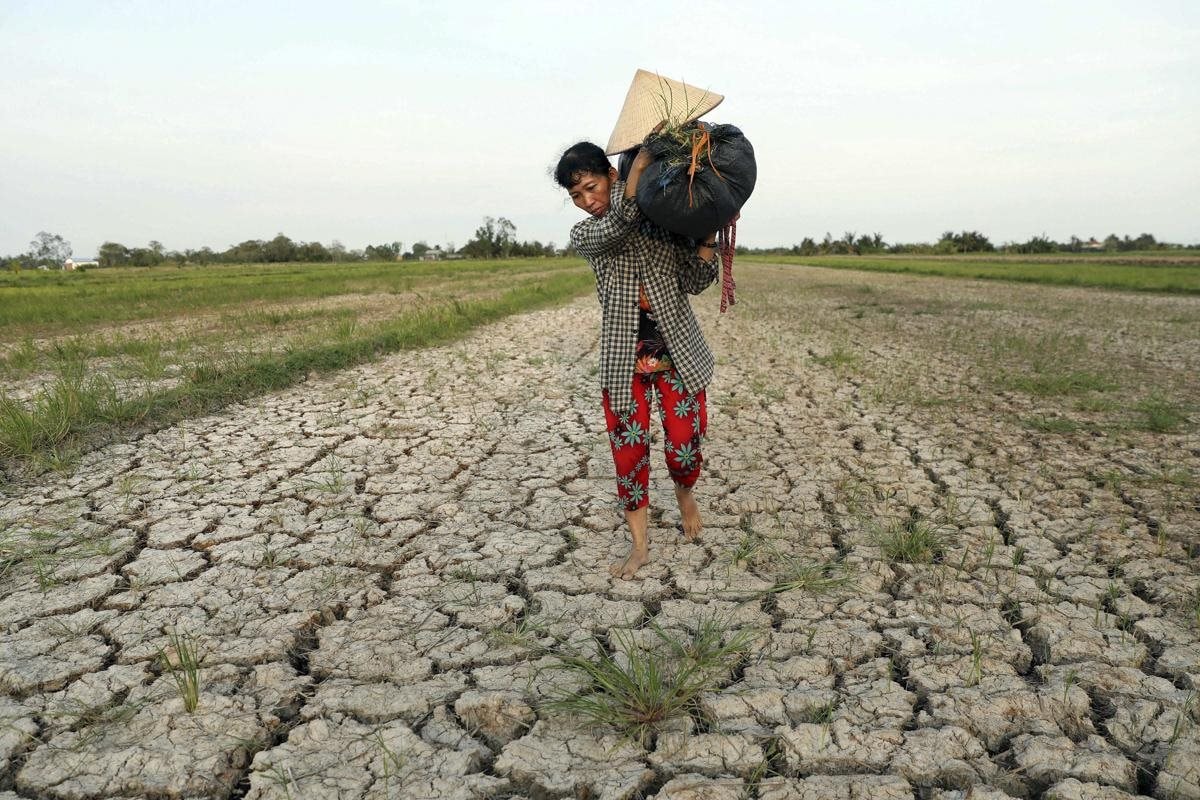
Meanwhile, the Mekong Delta region is experiencing increasingly pronounced impacts from saltwater intrusion. Under the influence of climate change and rising sea levels, saltwater intrusion is occurring earlier and lasting longer, penetrating deeper into the inland areas via the river and canal systems. According to the Southern Institute of Water Resources Science, many areas in the provinces of Tien Giang, Ben Tre, Tra Vinh, Soc Trang, and Bac Lieu are at risk of increasingly severe saltwater intrusion in the near future.
These changes not only deplete freshwater resources but also directly impact people's livelihoods, especially in communities heavily reliant on agriculture.
Experts warn that without effective management solutions, damage to the water environment could lead to significant economic losses. The World Bank estimates that Vietnam's agricultural GDP could decrease by approximately 3.5% by 2035 due to the impact of pollution and water depletion, and could even reach around 6% of GDP if considered across the entire economy.
The above situation shows that Vietnam's water resources are facing many major challenges, from depleted reserves and environmental pollution to the impacts of climate change. This necessitates the urgent need to manage, exploit, and use water resources sustainably, while mobilizing the participation of the entire society to ensure water security and the long-term development of the country.
The role of women in water resource protection.
In the context of water resources facing numerous challenges such as dwindling reserves, environmental pollution, and the increasingly evident impacts of climate change, the role of communities in water resource protection becomes particularly important. Among them, women are considered a core force because they are directly involved in water use and management in their daily lives.
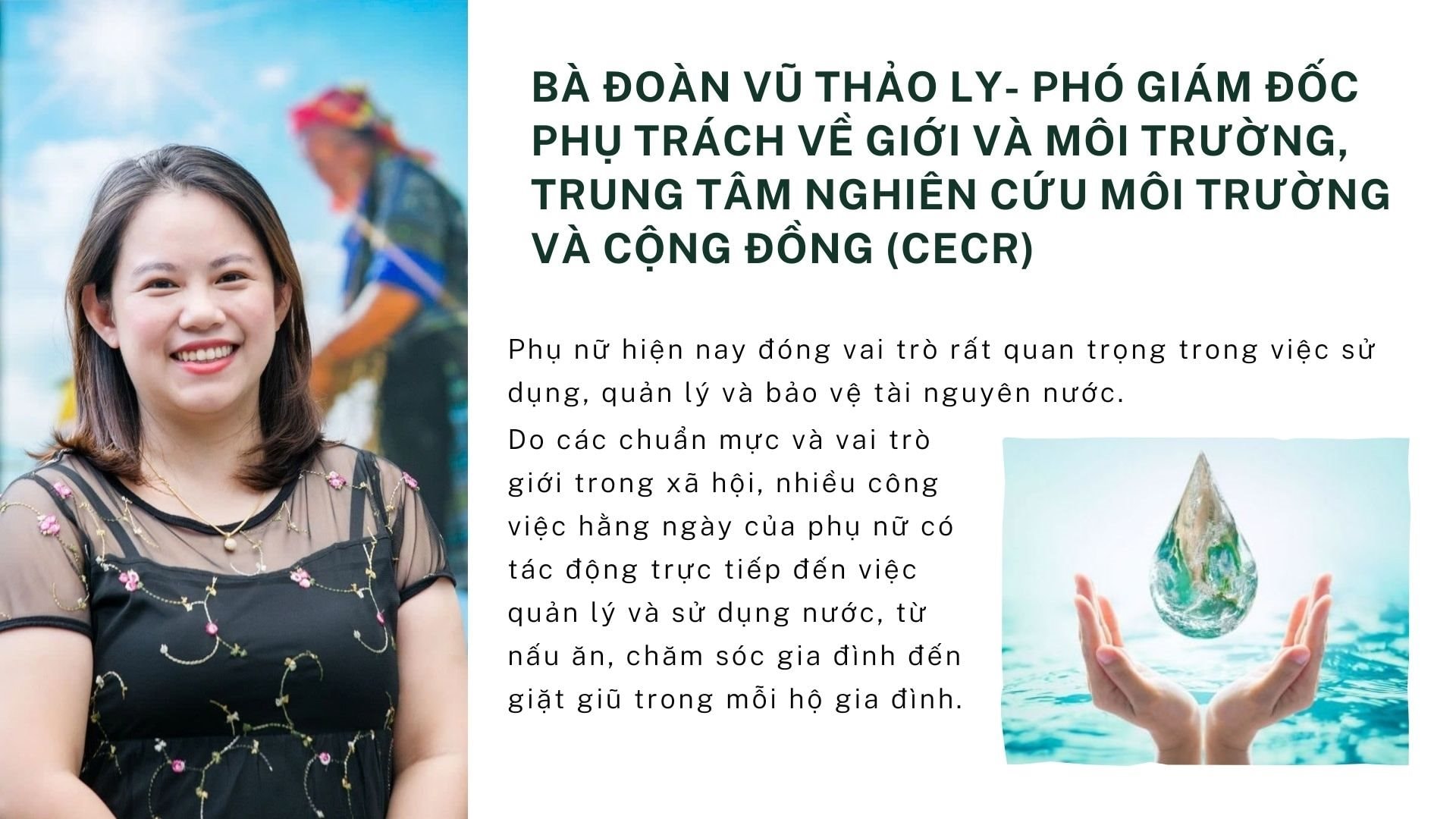
According to Ms. Doan Vu Thao Ly, Deputy Director in charge of Gender and Environment at the Center for Environmental and Community Research (CECR), women today play a very important role in the use, management, and protection of water resources. Due to gender norms and roles in society, many of women's daily tasks directly impact water management and use, from cooking and family care to laundry in each household. These seemingly familiar activities contribute to forming habits of water conservation, reducing waste, and protecting domestic water sources.
Women are not only direct users of water, but they also play a crucial role in educating and shaping environmental awareness in the younger generation. In many families, mothers often guide their children in daily habits such as saving water, maintaining environmental hygiene, and not littering in rivers, lakes, and canals. These small lessons from the family contribute to shaping children's awareness and responsibility towards protecting natural resources, thereby spreading positive actions throughout the community.
At the community level, women are also actively involved in environmental and water resource protection activities. In many localities, women often take the lead in movements to sort waste, collect garbage, and participate in environmental sanitation campaigns, cleaning ponds, lakes, and streams. These activities not only contribute to reducing water pollution sources but also raise public awareness of their responsibility to protect water resources.
However, in the field of water supply and drainage – an engineering discipline closely linked to the research, design, construction, and management of water-related infrastructure – the role of women has not been fully realized. The water sector has long been considered a specialized engineering field, more suited to men. Therefore, in many businesses within the industry, women primarily work in administrative, accounting, or communications departments, while opportunities to participate in engineering, management, and leadership roles remain limited.
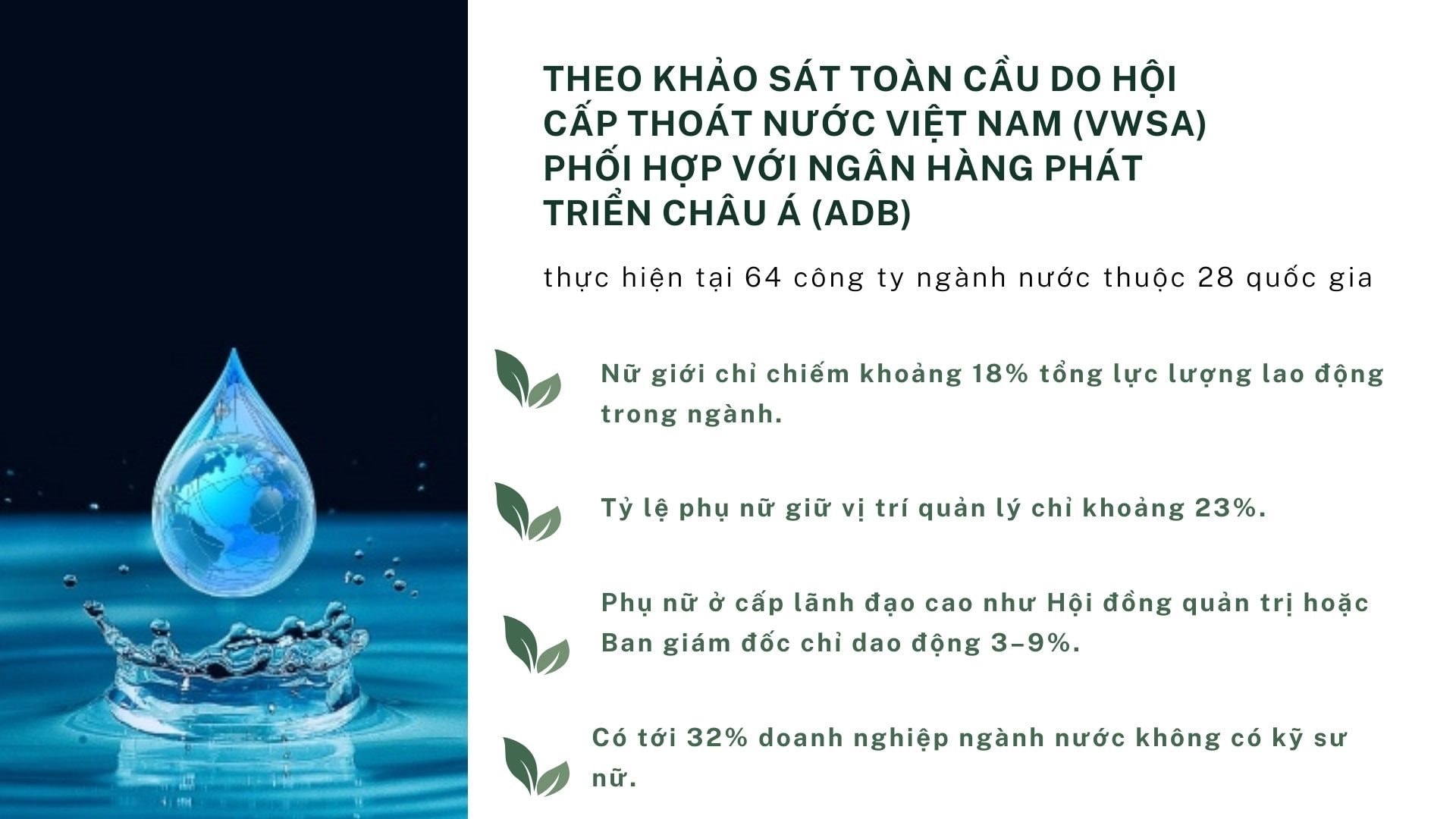
According to a global survey conducted by the Vietnam Water Supply and Drainage Association (VWSA) in collaboration with the Asian Development Bank (ADB) across 64 water companies in 28 countries, women account for only about 18% of the total workforce in the industry. The percentage of women in management positions is only about 23%, while at higher leadership levels such as the Board of Directors or Management Board, the figure ranges from 3–9%. Notably, as many as 32% of water companies do not have female engineers.
These figures show that gender equality in the water sector still has many gaps that need attention. Recognizing and promoting the role of women in the water supply and sanitation sector is not only a requirement for gender equality but also crucial for the sustainable development of the water sector. When women are given more opportunities to participate in technical, managerial, and decision-making activities, human resources will be more fully utilized, contributing to improved management and protection of water resources in the long term.
Solutions to promote water resource protection linked to gender equality.
In the context of water resources facing increasing pressure from environmental pollution, rising demand, and the impacts of climate change, the protection and sustainable use of water resources need to be implemented with a holistic approach. Integrating gender equality into water resource management is considered a crucial solution to promote the role of women and mobilize the participation of the entire society in water resource protection.
Improving policies and integrating gender equality into water resource management.
One fundamental solution is to develop and refine comprehensive water resource management policies that ensure equal participation from all social groups. Integrating gender equality into water programs and strategies not only contributes to ensuring access to clean water for everyone but also creates opportunities for women to participate more actively in the management, monitoring, and protection of water resources.
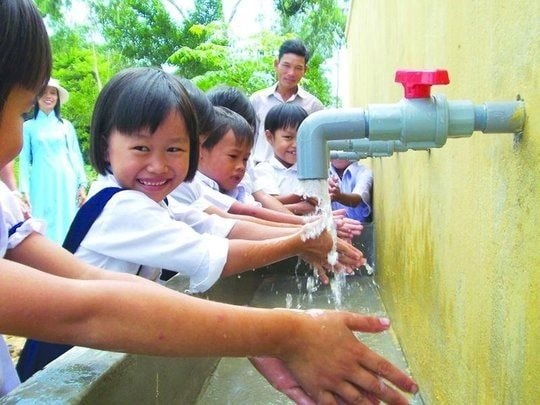
In reality, many initiatives have been implemented to support women and children in better accessing clean water and safe sanitation. The Vietnam Women's Union, in coordination with the United Nations Children's Fund (UNICEF), organized a workshop to discuss solutions to promote access to clean water and sanitation for women and children, especially in rural and remote areas. At this workshop, delegates presented the draft Action Plan of the Women's Union at all levels to implement the "3 Clean" criteria in the National Target Program for New Rural Development giai đoạn 2021–2025, and consulted with ministries, sectors, and domestic and international organizations to refine coordinated solutions during implementation.
Experts believe that promoting access to clean water and sanitation not only brings practical benefits to women and children but also contributes to improving public health, protecting the environment, and working towards sustainable development goals.

Promoting the application of science and technology in water management and supply.
Besides improving policies, the application of science and technology plays a crucial role in enhancing the efficiency of water resource management and utilization. Investing in the development of clean water supply technologies, wastewater treatment, and water reuse can help reduce pressure on natural water sources while ensuring water quality for domestic and industrial use.
Simultaneously, water monitoring and surveillance systems need to be strengthened to track water quality and quantity, and to promptly detect pollution risks. The application of technology in water environmental monitoring will provide management agencies with accurate data to make appropriate management decisions, contributing to long-term water resource protection.
Furthermore, developing sustainable water supply models in rural, mountainous, and disadvantaged areas is also considered a practical solution to ensure that all citizens have access to clean water and safe sanitation services.
Raising public awareness and empowering women.
Along with policies and technology, raising public awareness is crucial in protecting water resources. Diverse communication activities need to be implemented to provide people with knowledge about the benefits of using clean water, maintaining personal hygiene, and protecting the aquatic environment.
Many opinions expressed at the workshop organized by the Vietnam Women's Union in collaboration with UNICEF suggested the need to strengthen communication activities and guide members and women on building standard sanitation facilities, safe water storage systems, and measures to protect water sources in the family. At the same time, it is necessary to develop community models suitable to the socio-cultural conditions of each locality to improve implementation effectiveness.
Furthermore, facilitating women's access to support funds is also considered a crucial solution to improve clean water and sanitation conditions in the community. Through credit programs of the Social Policy Bank or local credit funds, many households can invest in building clean water and sanitation facilities, contributing to improving their quality of life.
In the water and wastewater sector, empowering and creating opportunities for women to participate more in technical, managerial, and leadership positions is also considered a necessary solution. In fact, many women have taken on important positions such as factory director, technical department head, or deputy general director in water industry enterprises. Beyond office work, many female officials are directly involved in operating wastewater treatment systems, supervising irrigation projects, and addressing environmental pollution.
Experts believe that creating an equal, gender-neutral work environment and evaluating competence based on expertise will help women confidently develop their abilities. When women are empowered and more deeply involved in water resource management, community initiatives will be more effective, contributing to water conservation and promoting sustainable development goals.

The global water crisis is affecting billions of people, yet its impact is not uniform across all social groups. In many areas lacking access to clean drinking water and basic sanitation, development gaps are becoming increasingly apparent, with women and girls often being the most severely affected.
In many rural and remote communities, women and girls are still the ones who directly fetch water every day. They spend hours traveling to bring back heavy water containers for their families, while also facing numerous health and safety risks. When the water source is unsanitary, they are also the ones who care for family members who suffer from waterborne diseases and poor hygiene. The time and effort spent searching for water significantly reduces the opportunities for education, employment, and personal development for women and girls.
Notably, while women play a central role in water use and management at the household and community levels, they often have limited opportunities to participate in decision-making processes related to water resource policy, investment, and governance. The lack of women's voices in governance institutions means that many solutions fail to adequately reflect the real needs of half the population.
According to UNICEF, water can be a powerful driver of gender equality, but this can only be achieved when policies and solutions are built on a human rights approach. Access to clean water and sanitation is not only a basic individual need but also an essential foundation for sustainable development.
In reality, when women are given equal participation at all levels of leadership and management in the water sector, from water supply system design and operation to policy planning and budget allocation, the efficiency of water resource management can be significantly improved. Women are not only water users but can also become engineers, scientists, farmers applying sustainable irrigation technologies, sanitation workers, or community leaders promoting water conservation initiatives.

In the context of climate change, increasing water-related disasters, and financial challenges, managing water resources as a shared societal asset has become an urgent necessity. This requires the participation of the entire community, not only women but also men and boys, to share responsibility for protecting water resources, promoting access to clean water, sanitation, and health for all; and simultaneously changing norms and behaviors that hinder the progress of women and girls.
Only when water and sanitation systems are designed to be inclusive, meeting the diverse needs of all social groups, will water truly become a driver of sustainable development. Where there is a stable, safe, and fairly managed water supply, women's opportunities for education, employment, healthcare, and social participation will expand.
The message of World Water Day thus becomes even more meaningful: "Protecting water today is protecting the future for generations to come." This is not only a call to protect natural resources, but also a reminder of the responsibility to build a sustainable society where everyone, regardless of gender, has equitable access to water and opportunities for development.